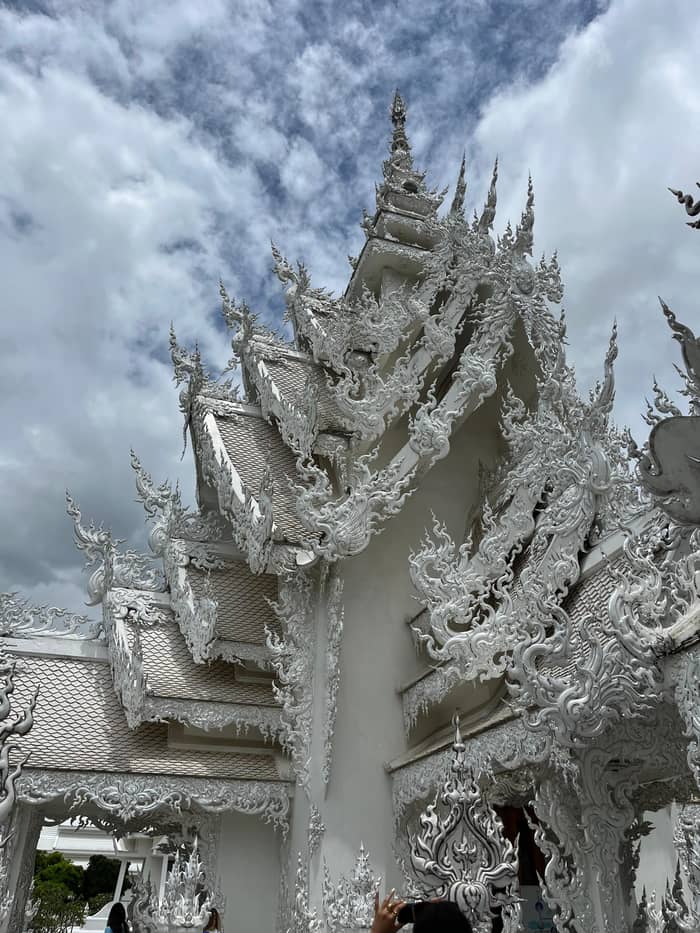
Clearest skies
Cool and dry
November to February
See the tourChecklist you can tick
Checklist: 10 items
Mark each item when done. Progress is stored on this device.
0 / 10 ready
That is everything. Pick your date and your pickup point, and the temples are settled.
Reserve a spotChiang Rai runs cool and dry for a few months, hot for a few and wet for the rest. Read the month-by-month numbers, the haze warning and the hours that make the white hall look its best.
Editorial team, chiangraidaytour.click · Updated November 16, 2026 · ~7 min read
Summary view
The numbers come from the nearest Chiang Rai station with a full record, averaged over 1991 to 2020, with temperature and rainfall for every month of the year.2 The chart draws the heat and the rain in one view, and its caption names the station and its distance from the temple. Read it as the weather of the Chiang Rai plain, where the White Temple stands, not as a forecast for a given week.
Read the year in three blocks. The average daily high is lowest in December at 27.7 °C and peaks in April at 34.6 °C.2,2 Rain is almost absent in January and February, builds in May, peaks in August and falls away again in October.2,2,2,2 The tourist office describes three distinct seasons shaped by the summer and winter monsoons.5
The cool mornings are the surprise. January's average low is 13.5 °C, and December's is 13.9 °C, while January's average high is 28.6 °C.2,2 The tourist office's advice for the north is to dress in layers, and a thin jacket in the van earns its place.6 The gap between first light and afternoon is wide in these months.
Key months
| Month | Average high | Rain | Wet days |
|---|---|---|---|
| January | 28.6 °C2 | 7 mm2 | 02 |
| March | 33.8 °C2 | 37 mm2 | 32 |
| April | 34.6 °C2 | 81 mm2 | 62 |
| June | 32.5 °C2 | 200 mm2 | 132 |
| August | 30.8 °C2 | 374 mm2 | 182 |
| October | 30.8 °C2 | 97 mm2 | 62 |
| December | 27.7 °C2 | 17 mm2 | 12 |
Averages for 1991 to 2020 at the Chiang Rai station; a wet day counts at least 2.5 mm of rain.2
November to February is the stretch the tourist office recommends. It reports that the cool season has arrived with cooler air and drier air, and that travellers escape the normal tropical heat.1 At the White Temple the benefit is plain: average highs run from 27.7 to 31.3 °C across December to February, with 1 wet day or fewer a month.2,2,2
The light helps too. A tourist-office writer on the northern winter describes the temple's jagged white spires as if carved from ice against a clear cool-season sky.10 That is the season for photographs of the hall, because the white surface needs a clean sky behind it, and the low sun at either end of the day gives the mirrors a softer sparkle than the midday glare of the hot months.
The festival calendar adds to the draw of these months. The annual Chiang Rai Flower Festival at the New Year period shows roses, orchids and tulips.7 If you travel in the cool season, book your tour early, and plan for the temple to be busy in its middle hours, given the roughly 10,000 people a day that the tourist office reports.11
Heat and rain
Hours without sunlight at mid-month alongside days with 2.5 mm or more of precipitation. NOAA records, station Chiang Rai (temperatures and rainfall for all 12 months), 1991 to 2020.2
March and April are the hot months. The average high reaches 33.8 °C in March and 34.6 °C in April, and rain begins to return, with 81 mm in April and 6 wet days.2,2 A day on tarmac and white plaster is tiring in that heat, so plan the temple for the first hour after opening and leave the long afternoon drive for an air-conditioned van with water on board.
Haze is the other risk of the dry months. In late March 2019 the tourist office told visitors heading for Chiang Mai, Chiang Rai and neighbouring provinces to watch the air quality index and take care.3 It put most of the blame for the haze on forest fires, burning of scrub in the open and traffic exhaust.14 The advisory is dated, and the pattern it describes is a seasonal one, so check current reports before you book.
The Pollution Control Department publishes the reports that visitors can follow on the Air4Thai website or app, and the tourist office suggested an N95-rated face mask outdoors when the air is unhealthy.15,16 The coach day here can be cancelled free of charge up to 24 hours ahead, which takes the sting out of a bad forecast. If your dates are flexible, a hazy week is a reason to move the visit.
Pick your month
Say what matters most and get a season.
If I want the clearest sky for photographs
November to February
The tourist office describes the temple under a clear winter-blue sky in the cool season.10
If I want to avoid heat and haze
Skip March and April
April is the hottest month and the north has had haze advisories.2,3
If I want green hills and lower crowds
The wet months
Rain peaks in August, and the tourist office calls the rainy season refreshing.2,13
If I want the Songkran festival
April
The tourist office names April as the time for Songkran.8
If I want an empty hall
The first or last hour
About 10,000 people a day pass through, and it is open 08.00 to 17.00.11,4
Know your months
Clearest skies
November to February
See the tour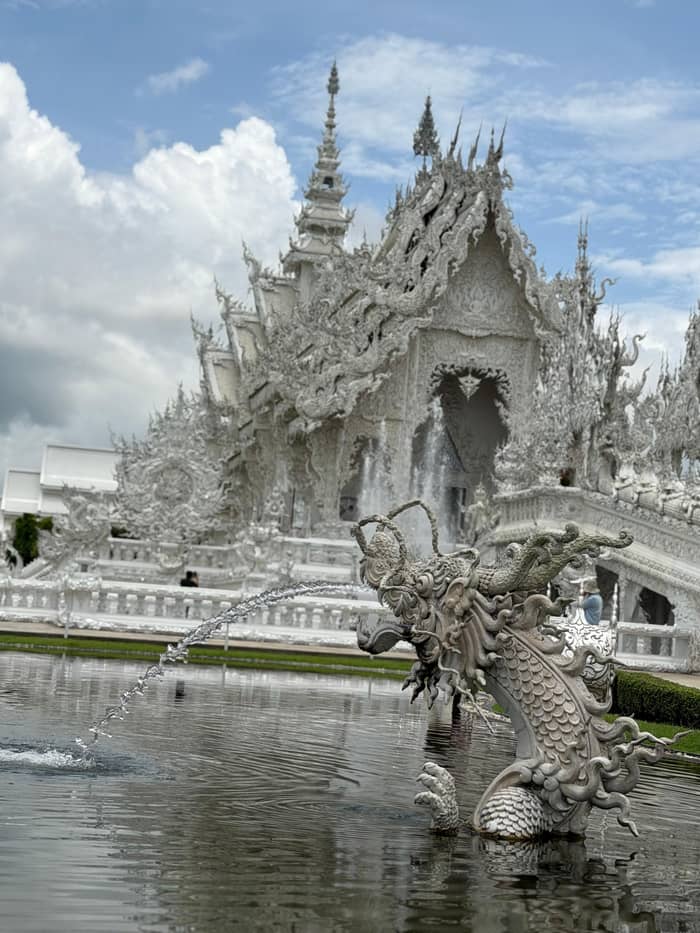
Heat and haze
March and April
See the tour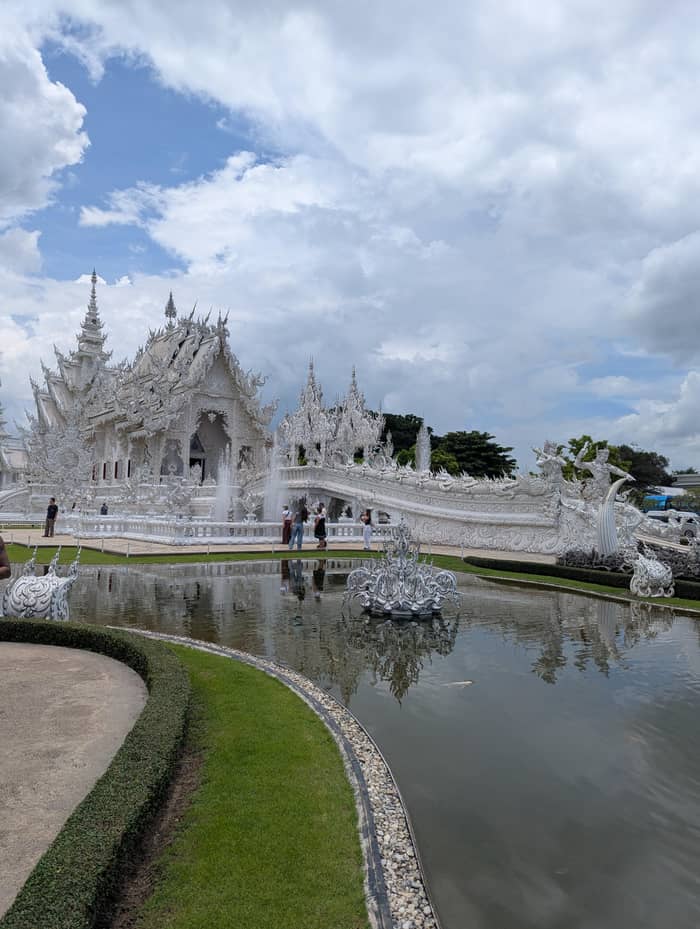
Green and cheap
May to October
See the tourThe wet months are the green ones. May brings 213 mm and 13 wet days, July 324 mm and 17, August 374 mm and 18, and September 294 mm and 14.2,2,2,2 In the tourist office's account the rainy season brings refreshing tropical showers, and it suggests waterfalls and jungle treks for those months.13 For the White Temple, that means damp ground and softer light.
Rain changes the logistics rather than the temple. Britain's foreign ministry cautions that torrential rain brings flash floods, landslides and travel disruption, above all in the north and in the hills.12 Allow slack in the plan and keep your phone charged. No official source says the temple closes in rain, and the hours remain 08.00 to 17.00 on the listed page.4
There is a cultural reward for travelling wet. The Akha Swing Festival tends to fall in the rainy season, around August or September.9 October is the last wet month, with 97 mm and 6 wet days, and it is the point at which the cool season starts to appear in the numbers.2 If you travel at the end of that month, keep the same cancellable booking you would hold in August, and watch the forecast for the final week.
Price the day
Set your party size to compare days you can cancel if the weather turns.
Side-by-side: 4 options
Set your party size to compare days you can cancel if the weather turns.
≈
View≈
View≈
View≈
ViewGetYourGuide's starting prices, converted at the ECB reference rate; exact pricing appears when you book.
The year in events
Cool season
November to February are the months the tourist office recommends.1
New Year period
The annual Chiang Rai Flower Festival shows roses, orchids and tulips.7
Hot weeks
Highs reach 34.6 °C in April, and a haze advisory covered the north in 2019.2,3
Songkran
April is the time to celebrate Songkran, with boisterous fun and old traditions.8
Wet months
August is the wettest month at 374 mm of rain.2
Late rains
The Akha Swing Festival falls in the late rains.9
The hours set the frame for the whole visit. The attraction page gives daily hours, 08.00 to 17.00, and those firm edges apply in every season.4 The first slot after opening and the last before closing are the ones to aim for, and a small group that begins in the city can reach those edges with less effort than a coach from far away.
In the cool season a sweater at 7:00 AM becomes a burden by 11:00 AM, the tourist office's own rule of layers for the north.6 Plan your clothes the same way: a thin layer for the first hour and a hat for the middle of the day. The temple's dress rules apply at every hour, and the page on entry and dress has the detail you need.
Day tours give the temple between 1 and 1.5 hours, which suits the early or late slot best when you choose your own pickup. The coach day, which starts from $33, leaves the timing to the operator, so ask what time the group reaches the gate and book the departure that gets you there in the morning.
Video
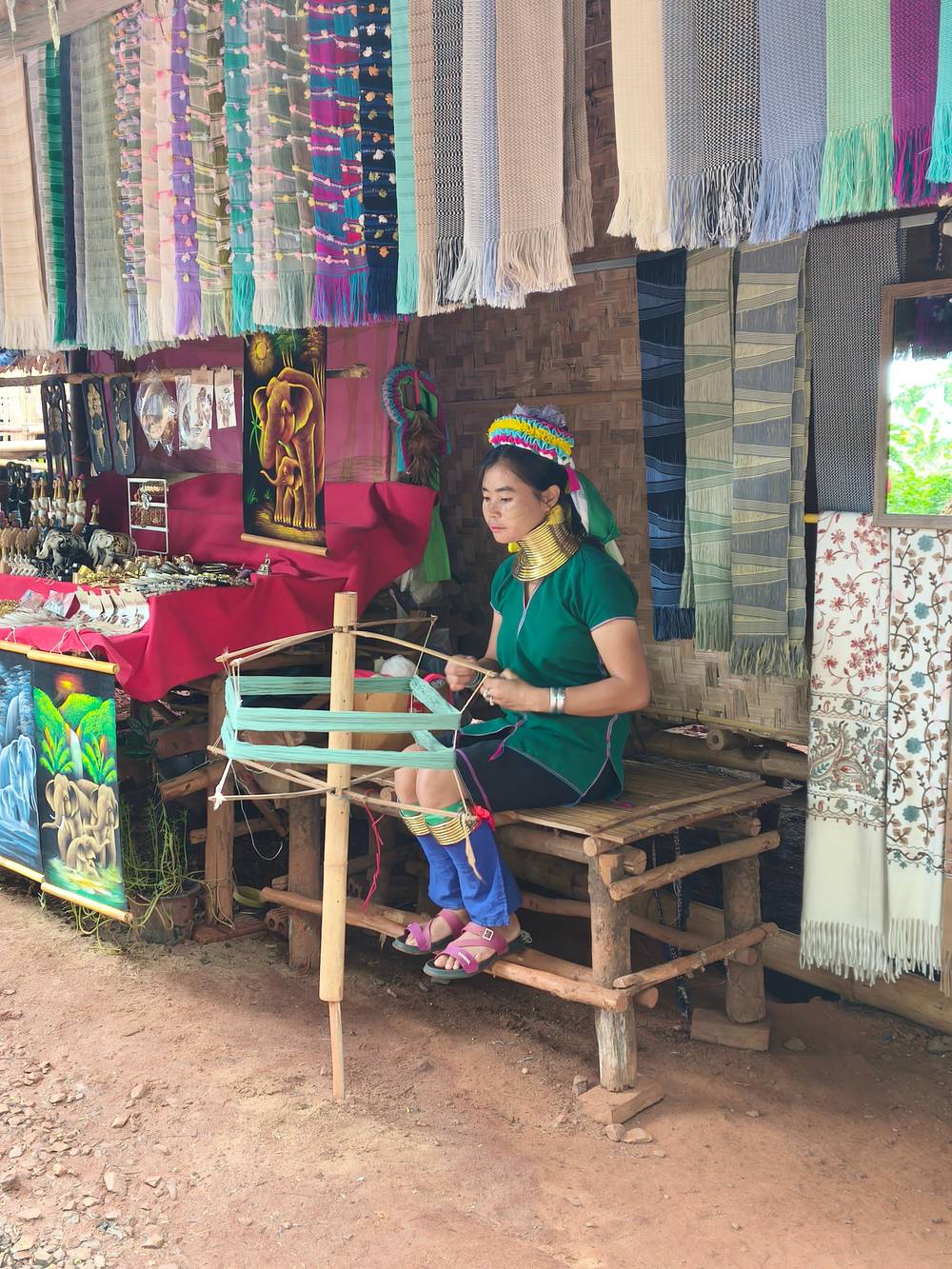
Helen and Andy Travel Vlogs on YouTube · Tap play to load the video; not before.
By 7:00 AM, you will need a sweater, scarf, and a sense of stoicism. By 11:00 AM, you will be stuffing that sweater into your backpack and cursing the sun.
The temple is a daytime place. Closing time on the attraction page is 17.00, so an evening walk under the spires is not part of an ordinary visit.4 Anyone searching for the temple at night may be after photographs of a lit-up hall. The pictures they find come from the Light Fest, and that was a special event, not a standing programme.
The Wat Rong Khun Light Fest, a multimedia show, was staged at the temple from 22 November to 22 December 2019.19 Nothing found for this guide says it has returned, so treat any listing that promises an evening visit as a separate product and read its terms. An ordinary day tour from Chiang Mai finishes its sightseeing in daylight and spends the evening on the road home.
For an evening in the city itself, the tourist office points to the Saturday Night Walking Street, a market that opens in the afternoon with antiques and handicrafts.20 That is a market in the city, not a temple visit, but it is a way to finish a day trip if you stay overnight. A day return to Chiang Mai from the city leaves little time for it.
The tourist office names April as the month of Songkran, the Thai New Year, a mix of noisy fun and old tradition.8 It falls in the hot, hazy part of the year, so the festival is a reason to go for those who want it, and a reason to move your temple day for those who do not. Expect crowds and noise in the city while it lasts.
The cool-season festivals are gentler. The Chiang Rai Flower Festival is annual and shows roses, orchids and tulips among many other flowers.7 Choose the week with the festival if you want a lively city, and the week before or after if you want an empty temple. Whatever you pick, a flexible, cancellable booking protects you if a forecast or a haze report changes the plan.
In short, the safest choice is November to February, the tourist office's best months, with a morning start.1 The hot weeks suit those who can handle the heat and the haze, and the wet months suit those who want green hills, cheaper fares and flexibility. Check the day's air quality and the weather before you leave, and put a spare layer at the top of the bag.
FAQ
The tourist office recommends those months, with the cool season bringing lower humidity.1
The Chiang Rai station averages 7 mm in January with no wet days to speak of.2
The average daily high reaches 34.6 °C in April at the Chiang Rai station.2
The tourist office advised visitors in March 2019 to follow air quality reports for Chiang Rai.3
The attraction page lists daily hours of 08.00 to 17.00 hrs.4
The coach day can be cancelled free up to 24 hours ahead, and the operator can tell you its wet-weather terms.
Sources
Going north to Chiang Rai? A real person can answer here.