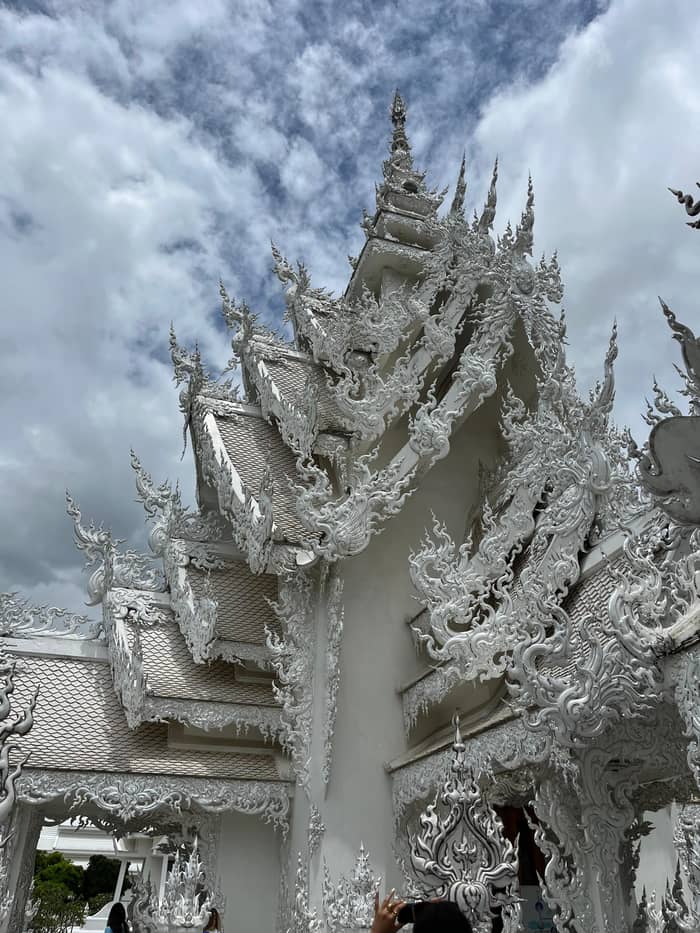
Lowest fare
The coach day
Hot spring, village, temples
- Fromfrom $33
- Blue Temple30 minutes listed
- Hilltop temple15 minutes listed
- CancelFree up to 24 hours
Choose your stop
Quick summary
The Blue Temple in Chiang Rai is Wat Rong Suea Ten, a blue hall open daily until 20.00, and the red temple stop on tours is Huay Pla Kang.
Temple essentials
View 17 stops
Choose a route and tap a pin or stop to see its note and open it in Google Maps.
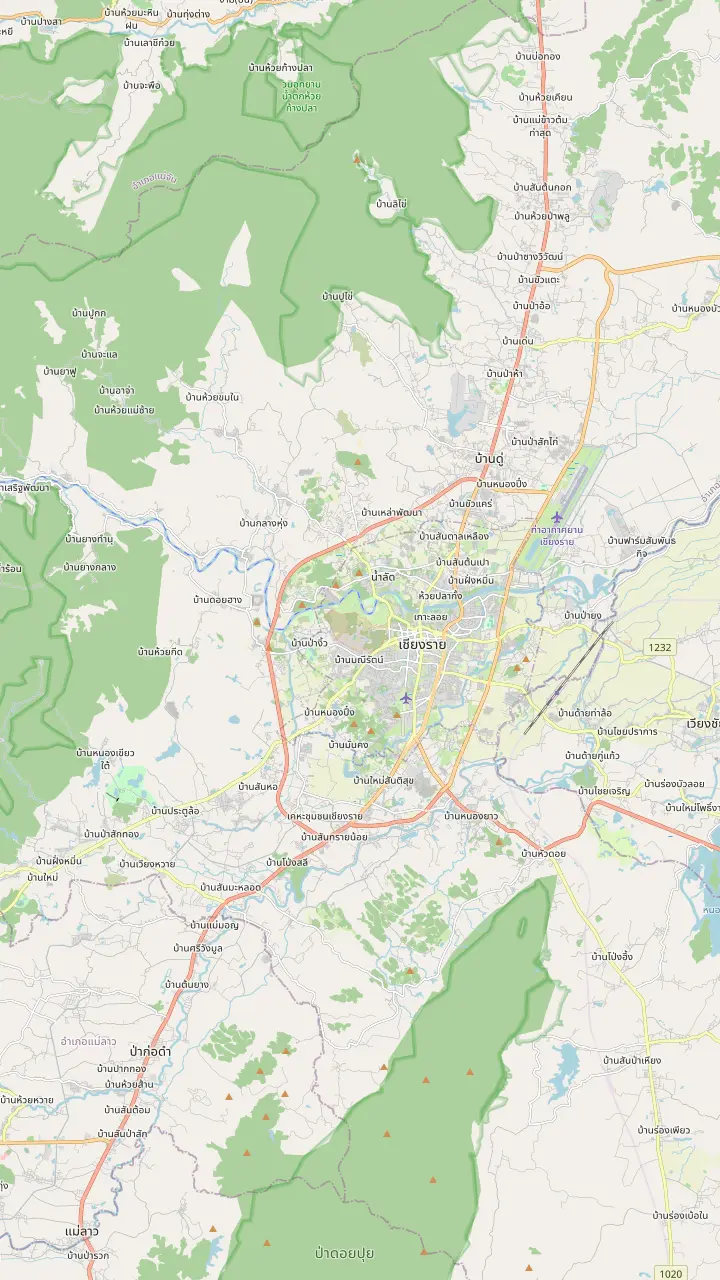
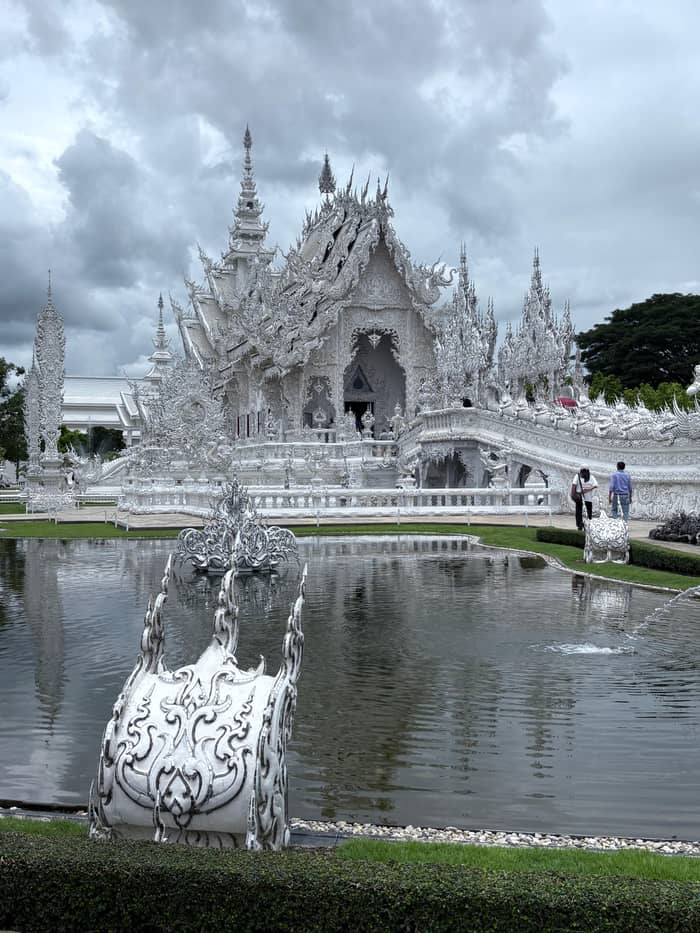
TAT lists the White Temple as open daily from 08.00 to 17.00 hrs.
Google MapsTAT lists the Blue Temple as open daily from 07.00 to 20.00 hrs.
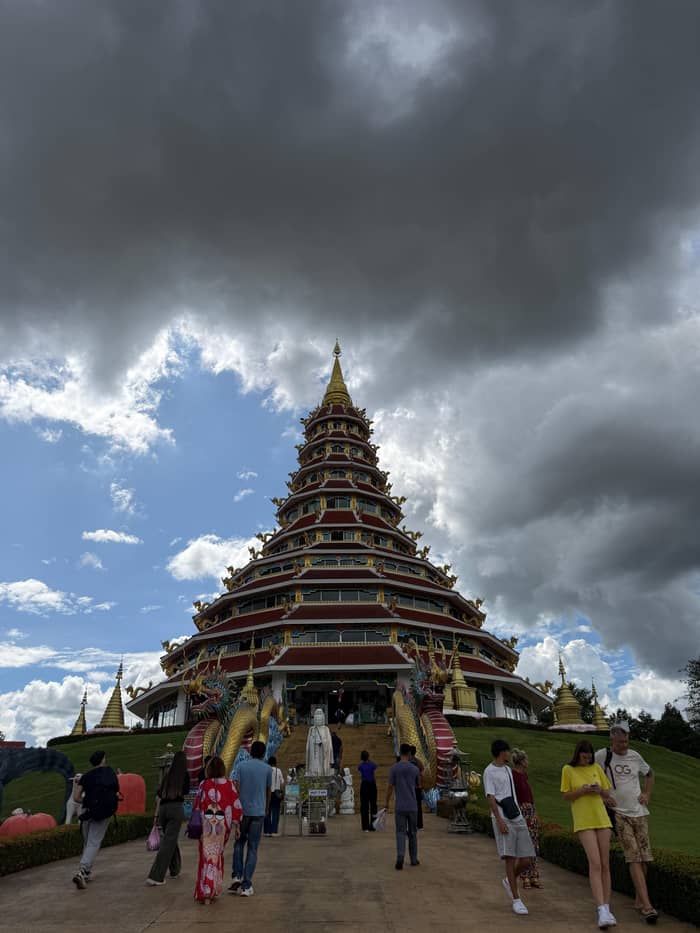
Google MapsTAT lists this hilltop temple as open daily from 07.00 to 21.00 hrs with a fee of 40 baht.
Google MapsTAT lists the Black House museum as open daily from 09.00 to 17.00 hrs.
Google MapsThe clock tower in the city centre was designed by the same Chalermchai who designed the White Temple.
Google Maps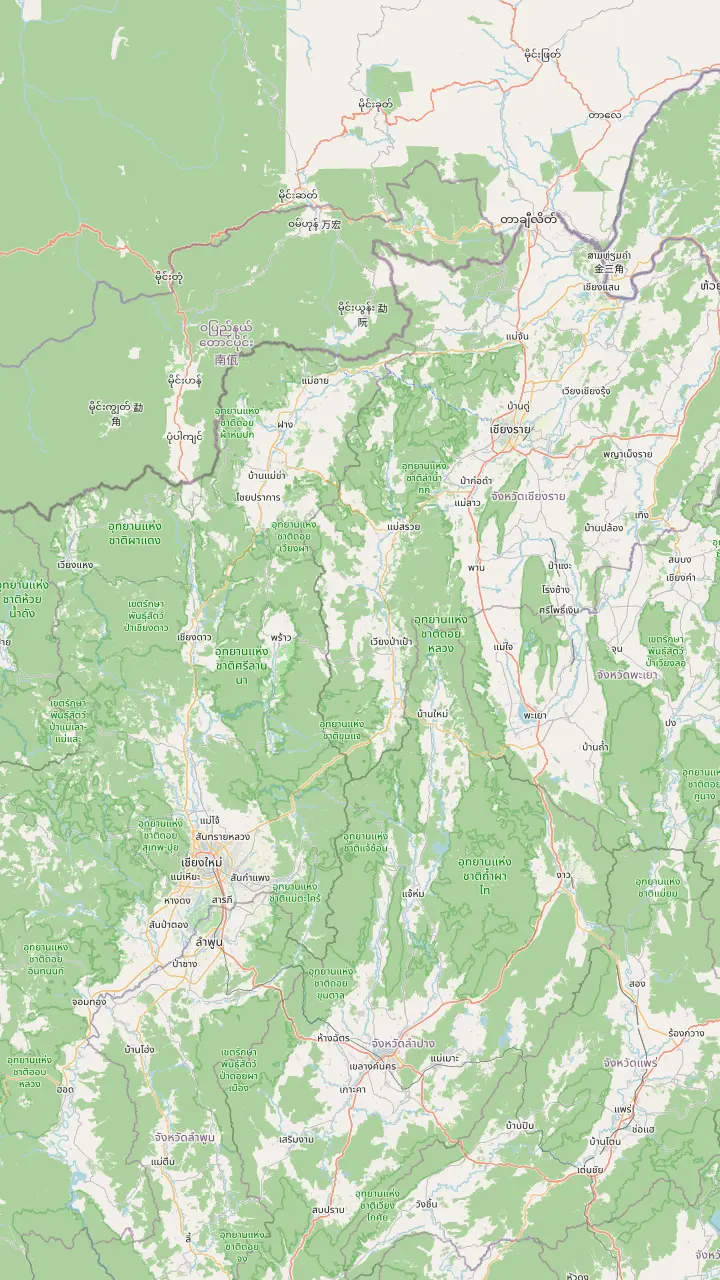
The monument in the old city of Chiang Mai; one day tour includes pickup within 5 km of it.
Google MapsA bus station on the north side of Chiang Mai, drawn as a reference point for the road north.
Google MapsChiang Mai International Airport, shown to place the flights against the road.
Google MapsMae Fah Luang Chiang Rai International Airport is one of six international gateway airports in Thailand.
Google MapsTAT lists the White Temple as open daily from 08.00 to 17.00 hrs.
Google MapsThe city's main bus terminal, drawn as a reference point in Chiang Rai.
Google Maps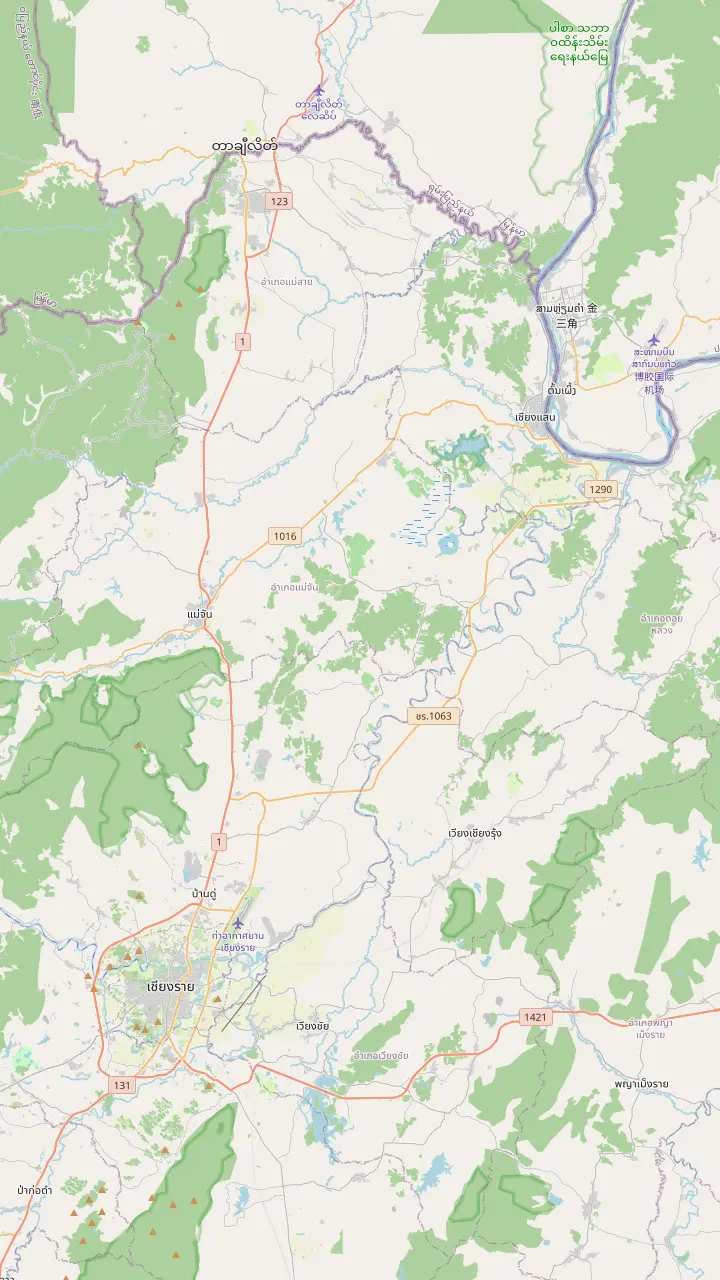
The clock tower in the city centre was designed by the same Chalermchai who designed the White Temple.
Google MapsA tea plantation that TAT suggests visiting on the way to Mae Sai or Doi Tung.
Google MapsThe museum in Chiang Saen's old town is open Wednesday to Sunday.
Google MapsThe first of two Golden Triangle viewpoints is from the hills of this temple.
Google MapsThe Golden Triangle at Sop Ruak lies 9 kilometres north of Chiang Saen.
Google MapsThe House of Opium sits 2 kilometres from the Golden Triangle.
Google MapsMap data from © OpenStreetMap contributors
Day tours from Chiang Mai pair the White Temple with two colourful neighbours. This guide says what each one is, what the tourist office lists for hours and fees, and how long a stop takes.
Editorial team, chiangraidaytour.click · Updated November 16, 2026 · ~7 min read
Summary view
The Blue Temple is the name the tourist office also uses for Wat Rong Suea Ten, and it sits in the Rim Kok subdistrict of Chiang Rai.4,1 It was rebuilt by a local artist known as Sala Nok, who is a student of Chalermchai Kositpipat, the artist behind the White Temple.1 That link ties the two temples together without making them look alike: one master, one pupil, two different palettes.
The tourist office describes the result as vibrant blue tones with stucco craftsmanship.1 It reports a drive of 10 minutes from the Night Bazaar area and gives 2016 as the year the temple was completed.4 That is a young temple by Thai standards, and visitors should read it as a contemporary work on an old temple site, not as a monument from the past.
Seen from the road, the colour is the first surprise. A blue hall shifts with the sky, and it reads differently in bright sun, under cloud and as the day ends. The tourist office's winter guide to the north says the Blue Temple offers a sapphire-hued contrast to its white neighbour, which is a fair summary of the experience.5
The three temples
| Point | White Temple | Blue Temple | Hilltop temple |
|---|---|---|---|
| Opening hours | 08.00 to 17.0010 | 07.00 to 20.002 | 07.00 to 21.003 |
| Entrance fee | 100 baht10 | None listed2 | 40 baht3 |
| Made by | Chalermchai Kositpipat11 | His student, Sala Nok1 | A monastery from 200112 |
| Time on tours | 1 to 1.5 hours | 30 minutes to 1 hour | 15 minutes to 1 hour |
| Best known for | Bridge, hall, Art Cave13 | A blue hall and its image6 | A pagoda and a statue14,15 |
Hours and fees come from the tourist office's pages for each temple and may change, while tour times follow the listings cited in each cell.10,2,3
The ordination hall is the main sight. The tourist office describes it as a striking blue hall with intricate designs, enshrining a Buddha image of 6.5 metres in height with a lap width of 5 metres.6 The same entry says the image holds 88,000 small Phra Rot Lamphun Buddha images inside it, which gives the statue a layered meaning for believers.6 These are figures to quote with the tourist office's name beside them.
The walls carry murals showing the stories of the Buddha, and they are best seen in no hurry.6 The hall asks for the usual temple conduct: shoes off at the door, shoulders and knees covered, hats off and the phone on silent. The tourist office gives the same list for every Thai temple, and the day-tour listings repeat it in their own words.7,8,9
Hours are generous. The tourist office lists the Blue Temple as open daily from 07.00 to 20.00 hrs, which is a longer day than the White Temple keeps, and its page gives no entrance fee.2 That leaves room for a self-drive visit outside tour hours, and it also means a tour that stops here at midday can be matched by an early or late visit of your own.
Time at the stop
Bars show the minutes five listings allow at Wat Rong Suea Ten, from the coach day to the half day from Chiang Rai; if you drive yourself, the clock is yours.
Tour titles use the word red, but the stop named on the itinerary is Huay Pla Kang Temple. One listing is titled with red, blue and white temples and lists Huay Pla Kang after the Blue Temple, and the coach day on this site names the same temple for its pagoda of nine tiers and a statue of Guan Yin. The colour in the title is a seller's nickname; the name on the tourist office page is Wat Huai Pla Kang.14
The tourist office describes a nine-tiered pagoda with Chinese-style roofs and dragon motifs on each tier, topped by a bell-shaped chedi with Burmese-style spires.14 A white stucco ordination hall sits up Naga staircases. The grounds also hold a Guan Yin sculpture of approximately 79 metres on a hilltop, which the tourist office calls Thailand's largest Guan Yin statue, with a lift for the view.15
The temple began as a monastery in 2001 and was recognised as a temple in 2009.12 Its attraction page gives 07.00 to 21.00 hrs daily, with the elevator running from 07.00 to 18.00 hrs, and an entrance fee of 40 baht.3 One more listing is titled with Big Buddha and lists the same Huay Pla Kang Temple on its route.
Your stops
Say what you came for and get a plan for the three stops.
If I only have one hour for the pair
Blue Temple, then the hilltop
The coach day lists 30 minutes and 15 minutes, so a day with longer stops suits slower visitors.
If I want the blue hall and its murals
Choose a 1-hour stop
The van and bus day gives the Blue Temple 1 hour, enough to sit in the hall.
If I want a view over the valley
The hilltop temple
If I am driving myself
Use the long hours
The Blue Temple stays open until 20.00 and the hilltop temple until 21.00.2,3
If I want the smallest cash bill
The Blue Temple
The tourist office lists no fee for it and 40 baht for the hilltop temple.2,3
Three ways to see them
Lowest fare
Hot spring, village, temples
Longer stops
Three temples, guide
Unhurried
Small group, car
Compared in one sentence: the White Temple is an art project by one master, the Blue Temple is a hall rebuilt by his student, and the hilltop temple is a newer monastery with a pagoda and a giant statue. Their styles are different enough that the trio works as a set, and their white and blue temple in Chiang Rai pair forms the core of every listed day above.11,1,14
On scale the three are unlike. The White Temple has a bridge, a hall, an Art Cave and galleries, all spread across a large site.13,25 The Blue Temple is built around a single hall and its image.6 The hilltop temple trades on height: a nine-tiered pagoda and a statue of approximately 79 metres.14,15 A longer stop only repays you at the first of these.
On cost, the tourist office gives a fee of 100 baht for the White Temple, a fee of 40 baht for the hilltop temple and no fee for the Blue Temple.10,3,2 One listing's cash list says THB 200 for the White Temple, so the first figure may sit lower than the day's real charge. None of this changes the order of the tour; it only changes how much cash goes in your pocket.
Price the day
Enter your party size to weigh the days that reach these temples.
Side-by-side: 4 options
Enter your party size to weigh the days that reach these temples.
≈
View≈
View≈
View≈
ViewGetYourGuide's starting prices, converted at the ECB reference rate; exact pricing appears when you book.
On the day
Morning drive
The ride to the spring on the listed hot spring day is 1.5 hours by van, and the temples come after it.
White Temple
The hot spring day gives the White Temple 1.5 hours.
Blue Temple
The same day gives the Blue Temple 1 hour, and a van and bus day gives it the same.
Hilltop temple
The same listing gives Huay Pla Kang Temple 1 hour.
Drive home
The hot spring day ends with a van of 2 hours back.
Listed tours follow the same order. A van and bus day from Chiang Mai leaves for 1.5 hours, gives the White Temple 1 hour, the Blue Temple 1 hour and Huay Pla Kang Temple 1 hour, then takes 3 hours to return. Another listing starts with a hot spring and gives the White Temple 1.5 hours, the Blue Temple 1 hour and Huay Pla Kang 1 hour.
The coach day lists shorter allowances: 30 minutes for Wat Rong Suea Ten and 15 minutes for Huay Pla Kang, after a long run to the White Temple. That is quick, and a guide will move you along. If you want to sit in the blue hall and read the murals, a day with 1 hour at the Blue Temple suits you better than the 30-minute slot.
A half day from Chiang Rai shows how the three connect when no one is in a hurry. A short day of 5 hours begins and finishes in Chiang Rai and links them with cars of 25, 30 and 20 minutes, giving the White Temple 1.5 hours and the Blue and hilltop temples 1 hour each, from $46. Compare it with a long coach day from Chiang Mai, where the drive uses most of the hours.
Video
TheAmericanTravelGuy on YouTube · Tap play to load the video; not before.
Wat Rong Suea Ten (Blue Temple) offers a sapphire-hued contrast that is almost alive in its vibrance
At the temples
Fees are simple to summarise. The Blue Temple page lists none, the hilltop temple lists 40 baht, and the White Temple lists 100 baht on the same tourist office's pages.2,3,10 Pay in baht and keep small notes. A temple that is free today may ask for a donation, and the tourist office notes that the White Temple welcomes one.26
Hours are the other check. These temples open between 07.00 and 08.00 and close between 17.00 and 21.00 on the tourist office pages, so a tour has plenty of room inside them.10,2,3 The one hour you need to watch is 18.00, when the elevator at the hilltop temple stops, so reach the statue before then if you want the view from the top.3
Dress is the same everywhere. TAT's temple etiquette note wants sleeves on top and knees covered below, with no spaghetti straps for women.7 Day-tour listings word it as covered shoulders and legs, and one bans flip-flops, tank tops and short pants. A thin scarf and light trousers in the bag cover every stop on the route.
The cool season shows the pair at their best. The same winter guide sets the white spires against a clear cool-season sky and the blue hall beside them as a vivid counterpoint.5 The tourist office recommends November to February for travel, once the cool season sets in.27 If you can choose your date, pick a clear morning and look at the forecast the night before; the blue hall photographs best with open sky behind it.
A day tour sets the time of day for you, so choose your departure with the light in mind. If a listing leaves Chiang Mai at the start of the day, the Blue Temple is a mid-afternoon stop, and the blue shows well under a bright sky. A self-drive visit can use the long hours the tourist office lists, so a late afternoon stop before 20.00 is open to you.2
Use the stops as a contrast, not a checklist, and let the light and the crowd decide how long you stay at each one. Walk the white site slowly, spend a calm hour in the blue hall, then go up to the hilltop and decide about the lift, which runs until 18.00.3 A traveller who has only a short slot at each should pick one detail to look for, such as the blue murals or the Naga stairs, and leave the rest.
FAQ
The tourist office describes a blue ordination hall rebuilt by the artist Sala Nok, a student of the White Temple's artist.1
A listing titled with a red temple lists Huay Pla Kang after the Blue Temple, which the tourist office calls Wat Huai Pla Kang.14
The page lists daily hours of 07.00 to 20.00 and gives no fee; carry small notes for donations anyway.2
The tourist office lists a fee of 40 baht and daily hours from 07.00 to 21.00.3
The coach day lists 30 minutes and a van and bus day lists 1 hour.
Sources
Going north to Chiang Rai? A real person can answer here.